Showing posts with label brain exercise. Show all posts

Sunday, February 21, 2016

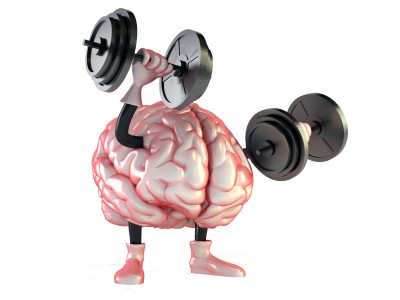
Best Exercise for Brains


I’m brain-damaged. 

This will come to no surprise to many of you who read this blog. As a result of my initial surgery, follow-up surgeries and treatments, my brain performance was, well, worse than pre-brain tumor.

As a result, I’m continually looking for ways to improve my thought process, my brain power and my ability to cogitate (assuming these are all different things).

So, you shouldn’t be surprised that I am keenly interested in a recent article entitled “Which Type of Exercise Is Best for the Brain?” written by the wonderful Gretchen Reynolds: http://mobile.nytimes.com/blogs/well/2016/02/17/which-type-of-exercise-is-best-for-the-brain/  

The article reprises research conducted by researchers at the University of Jyvaskyla in Finland which studied the impact of different kinds of exercise on the brains of mice. Here’s what I believe to be the most revealing quote of the article: “Those rats that had jogged on wheels showed robust levels of neurogenesis. Their hippocampal tissue teemed with new neurons, far more than in the brains of the sedentary animals. The greater the distance that a runner had covered during the experiment, the more new cells its brain now contained.”

Reynolds goes on to write that “Obviously, rats are not people. But the implications of these findings are provocative. They suggest, said Miriam Nokia, a research fellow at the University of Jyvaskyla who led the study, that ‘sustained aerobic exercise might be most beneficial for brain health also in humans.’”

Before you start training for a marathon, however, I suggest that you read her entire article.

And here’s a link to the abstract in the “The Journal of Physiology” - http://onlinelibrary.wiley.com/doi/10.1113/JP271552/abstract


Copyright: <a href='http://www.123rf.com/profile_jorgenmac'>jorgenmac / 123RF Stock Photo</a>

Saturday, February 1, 2014

Does Lumosity Work? (Kesler of Stanford says “yes”)

For starters, you should probably know that Lumosity– www.lumosity.com - is “a San Francisco-based company that provides an online brain training program, where subscribers play nearly 40 different games to improve attention, flexibility, memory and problem solving. It launched in 2007 and has about 40 million subscribers.”

Let me see, if the US population is roughly 320 million people, which means something like 12 – 13 % of us is training our brains on Lumosity which seems incredibly high…and it doesn’t count all the other online brain exercise programs out there like Cogmed (http://www.cogmed.com/) and PositScience (http://www.positscience.com/ ).

Shelli Kelser is a assistant professor of psychiatry and behavioral sciences and I read about her opinion in a nicely written DailyTech.com posting by Tiffany Kaiser: http://www.dailytech.com/article.aspx?newsid=31612. You should know that she, like me, is a Lumosity-addict.

Here’s the crux of Kaiser’s posting in response to the “Does it work?” question: “Shelli Kesler, assistant professor of psychiatry and behavioral sciences at Stanford University, seems to think it does.

Kesler recently led a Stanford study that aimed to measure how well Lumosity's brain training transferred into the real world. She used a small sample of 41 breast cancer patients who had been treated with chemotherapy. Past studies have shown that cancer patients who've undergone chemotherapy can experience cognitive impairment for years afterward.

The experimental group in the Stanford study played Lumosity games four times a week for 12 weeks, and results showed that they had improved word finding, executive function and processing speed over the control group.”

Using breast cancer victims as the experimental group strikes me as relevant for us brain tumor survivors. And, since I know several breast cancer chemotherapy survivors, I’m going to pass this on to them, too.

Thursday, May 9, 2013

The Sharp­Brains Guide to Brain Fitness: How to Optimize Brain Health and Performance at Any Age

Now here’s a book I not only want to read, but probably should read:  The Sharp­Brains Guide to Brain Fitness: How to Optimize Brain Health and Performance at Any Age

The authors describe the book as one that “…cuts through the clutter of misconceptions, superficial and conflicting media coverage, and aggressive marketing claims, to help readers discover what really works, and what doesn’t, to improve brain health and performance at any age, to delay or prevent cognitive decline, and become smarter consumers of both media coverage and scientific research in the process.”

That’s a mouthful, but here’s some thoughts that struck me as I read it:

“…cuts through the clutter of misconceptions superficial and conflicting media coverage, and aggressive marketing claims,” – I find that the enormous amount of brain-building claims and counter-claims both confusing and frustrating. That these guys provide some objective third party point-of-view is really helpful.

“…help readers discover what really works, and what doesn’t” – If ginkgo biloba works, great! If not, somebody please tell me. That this book will point out the pretenders and the programs that really do improve brain performance is really attractive.

And, by the way, all the authors - Alvaro Fernandez, Elkhonon Goldberg, Pascale Michelo - are brainiacs: overly educated high achievers who are experts in this brain-building and exercise business.

For more info, use this link: http://sharpbrains.com/book/

Thursday, May 2, 2013

Physical versus Mental Exercise


As a brain tumor survivor, I am often wondering if riding my bike or opening up Mozilla and tackling Lumosity (www.lumosity.com) is better for brain building.

As it turns out, Heidi Godman, Executive Editor, Harvard Health Letter, wrote about this in a blog posting entitled “Which is better for keeping your mind fit: physical or mental activity?”

In an April 3rd blog posting, she noted that “A study published yesterday in JAMA Internal Medicine tried to tease out whether physical or mental activity was better for brain health.”

She went on to say that “There’s some evidence that exercise alone protects the brain. One study of people in their seventies published in Neurology showed that those who exercised the most had the least brain shrinkage and fewer white matter brain lesions, which can be signs of dementia. People who engaged in mental activities had more brain shrinkage and white matter brain lesions. Another study published recently in Stroke showed that older adults who exercised regularly reduced their risk of vascular-related dementia by 40%.”

Wait a minute, I thought, what about all that time I spend on Lumosity?

As if anticipating my concern, she commented that “Mental activity alone can also protect the brain. In one 2012 study, published in Neurology, researchers demonstrated a direct link between the amount of cognitive activity, such as reading the newspaper or playing chess, and the level of cognitive function in the following year.”

Her advice? “Take advantage of the brain protection that both physical and mental activities provide. On the physical side, start or keep moving. A good goal is 150 minutes of moderate intensity exercise a week, but any activity is better than none.”


Image credit: <a href='http://www.123rf.com/photo_16774194_brain.html'>abidal / 123RF Stock Photo</a>