Showing posts with label occupational therapy. Show all posts

Wednesday, February 22, 2012

My favorite therapists


I’ve been thinking about what makes for a really great therapist, because I’ve had two therapists that I thought were great: Ms. Violet Potocki and Ms. Beth Sullivan.

And as I think about it, it’s a tough job.  Most have the technical skills required for the job, i.e. what task to assign at what time in a patient’s journey given the issue they’re tackling. I found, and I think the literature agrees, that the task should be a bit challenging without being overwhelming.  I once had a therapist who gave me a homework assignment that was way above my ability – it took me five hours to complete one “find-the-words” exercise.

There’s also the coaching side of the job which is part street-smarts and part good listener and requires somebody with a pinch of empathy in their soul. They’re the type that knows that a smile and positive encouragement greases the gears. Just like in an athlete, if you think you can do it, you’re halfway there.  If you think your therapist doesn’t think you can do it, whatever “it” is, it’s a lot, lot harder.

This is another way of saying that I’ve also had the local equivalent of Nurse Ratchet proctoring me.  If you’re not familiar with Nurse Ratchet, try this link: http://en.wikipedia.org/wiki/Nurse_Ratched b

I’m also partial to therapists who know how to let you make an assignment fun.  While working with Beth, she gave me an assignment of plotting a cross-country trip from our house to the west coast.  She wanted to see if I could parse it into drivable chunks and figure out a route that made sense. I took that assignment and added an overlay of stops at Drive-in, Diner and Dive restaurants from the TV show of the same name. My first stop would have been Big Mama’s in Omaha because anybody who loves sweet potatoes and ice cream is alright with me - http://www.bigmamaskitchen.com/page/1h0l9/Home.html   

Beth genuinely liked that. She didn’t fake interest or somehow feel that it was frivolous.  I now use that example in my patient presentations because it hits on so many of the high notes that a good therapist weaves into her inspiring rehab song.

Some of the videos of Representative Giffords going through rehab also show a therapist who also seems to have all the temperament and vision and technical skills you’d love to have in your therapist. Here’s one example - http://www.youtube.com/watch?v=a16UBv9gEt0&feature=related

I’d love to hear more from everybody on this.

John

Wednesday, February 1, 2012

Hard is good…especially for brains

Here’s an interesting tip from Lumosity – brains like to be challenged. 

Huh?  I often think that my brain just wants to take it easy, take slow, and relaxxxx.  But maybe that’s just my laziness talking. Actually, after reading Dr. Eagleman’s book, Incognito, I have no idea which part of the brain I’m listening to any time…if that even makes sense.

One thing that Pam Zhang of the Lumosity blog asserts is that “Effective cognitive exercises must be both adaptive and novel in order to provide the brain with the challenges it needs.”

Does that mean that my standard Sudoku and crossword puzzles aren’t helping? Well, according to Ms. Zhang, they could be helping a lot more.

The analogy that seems to apply here is how we build muscles.  It’s hard to build muscles without a lot of straining, wheezing and hard work. Said differently, if all you do is walk around a bit, you don’t get a chiseled look and the ability to run a triathlon. So it is with brains, you don't get something for nothing - you got to make 'em wheez and struggle and work to build something. (Actually this whole idea of being able to build new brain cells is somewhat of a new idea. I suggest reading The Secret Life of the Middle-Aged Brain, by Barbara Strauch which does a great job of myth-debunking.)

Pam’s recent blog posting also says that you need to focus on brain exercises that are both adaptable and novel.

My sense of their use of the word “adaptable” is something more akin to “suitable”, as in something that’s just touch enough to make you work without getting hugely frustrated and quitting.  Early in my occupational therapy my therapist gave me a “find the words” assignment that I spent 4-5 hours on.  It was just way beyond my abilities at the time and I found the whole thing really discouraging.  The idea of a brain exercise seemingly within my grasp is something I’m much more interested in.

I get novelty, too.  The muscle analogy actually holds up pretty good here too.  We’ve learned that if we do the same exercises all the time, there’s just diminishing returns on a workout.  Your muscles know what to expect and are prepared for it, which is why P90X® in vogue right now. If my memory of “Mike and Mike in the Morning” commercials are accurate, they claim that one of the secrets is that it changes the workout every so often - they call it “muscle confusion” - so that your muscles don’t know what’s coming next.  I can imagine the same thing happening with my brain. (Actually my brain rarely knows what’s coming next.)

In fact, I find myself doing the same Lumosity exercises over and over again…even when I throw myself into a course (right now I’m on an well-needed “Attention” boost).

So I believe Ms. Zhang when she says that “The right kind of cognitive training introduces novel tasks that force the brain to process information in new ways”. So today I did my regular “Attention” boost and then tried “Rotation Matrix”.  I was lousy, which means, I guess, that if I stick with it for a while, I’ll build brain cells faster.

As I think about it, the really hard and un-fun part – the surgeries – are over. Now it’s time to embrace the fun hard parts.

Tuesday, December 6, 2011

The “Long-Tail” of Rehab

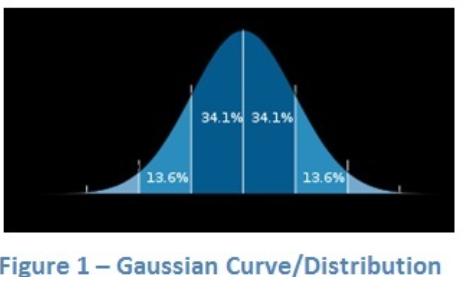
The term “Long Tail” refers to a statistical property in which a larger share of the population (“population” means anything you’re counting) falls in the “tail” of a probability distribution than one would expect under a typical Gaussian distribution.  The concept was originally popularized by Chris Anderson in an article in Wired magazine way back in 2004 - http://www.wired.com/wired/archive/12.10/tail.html 
About now I can imagine many of you rolling your eyes and thinking – “John, I’m lost. Please explain what a Gaussian curve is in English. Why should I care?” And, “What does this have to do with brain tumors or rehab?”

In my experience, the fat middle of the curve (Figure 1) is a good representation of the heighten TLC you get from friends and family and your medical team just before and just after your operation.  In contrast, Figure 2 is a nice visual representation of the commitment and TLC the patient should give, over time, to the boring, repetitive, mind-numbing (pun intended) rehab process.


Said differently, everybody can get excited about an operation, but when it comes time for the truly hard work of rehab, you the patient need to find a way to stay tenacious and committed to the rehab process long after your physical and occupational therapy insurance payments are long gone.

I also suspect that most patients don’t do the daily rehab regimen prescribed by their therapists (I’d love some feedback on this!) and, as a result, don’t maximize their “new normal”.
 
Comments?