Showing posts with label recovery. Show all posts

Tuesday, December 3, 2013

“15 Things I Wish I’d Known About Grief”

If you’re a brain tumor victim, caregiver or friend, you know about grief. That its debilitating, all consuming, mind-numbing and all too hard to shake off easily.
Blogger Teryn O'Brien wrote this list which resonated nicely with my own feelings and I thought others might find it helpful. Here’s her first five:
  1. You will feel like the world has ended. I promise, it hasn’t. Life will go on, slowly. A new normal will come, slowly.
  2. No matter how bad a day feels, it is only a day.  When you go to sleep crying, you will wake up to a new day.
  3. Grief comes in waves. You might be okay one hour, not okay the next. Okay one day, not okay the next day. Okay one month, not okay the next. Learn to go with the flow of what your heart and mind are feeling.
  4. It’s okay to cry. Do it often. But it’s okay to laugh, too. Don’t feel guilty for feeling positive emotions even when dealing with loss.
  5. Take care of yourself, even if you don’t feel like it. Eat healthily. Work out. Do the things you love. Remember that you are still living
You should know that Teryn describes herself as “…the blogger behind Identity Renewed, which placed #36 out of over 350 blogs nominated in a recent Christian Piatt/Patheos.com vote for top Christian blogs.”

Here’s a link to her “15 Things I Wish I’d Known About Grief”: http://identityrenewed.com/2013/11/21/15-things-i-wish-id-known-about-grief/

John

PS – While I try to keep this blog non-denominational or overtly religious, I felt that almost anybody who is grieving would get something out of this list.

Tuesday, December 6, 2011

The “Long-Tail” of Rehab

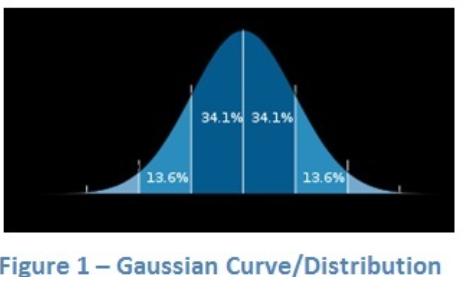
The term “Long Tail” refers to a statistical property in which a larger share of the population (“population” means anything you’re counting) falls in the “tail” of a probability distribution than one would expect under a typical Gaussian distribution.  The concept was originally popularized by Chris Anderson in an article in Wired magazine way back in 2004 - http://www.wired.com/wired/archive/12.10/tail.html 
About now I can imagine many of you rolling your eyes and thinking – “John, I’m lost. Please explain what a Gaussian curve is in English. Why should I care?” And, “What does this have to do with brain tumors or rehab?”

In my experience, the fat middle of the curve (Figure 1) is a good representation of the heighten TLC you get from friends and family and your medical team just before and just after your operation.  In contrast, Figure 2 is a nice visual representation of the commitment and TLC the patient should give, over time, to the boring, repetitive, mind-numbing (pun intended) rehab process.


Said differently, everybody can get excited about an operation, but when it comes time for the truly hard work of rehab, you the patient need to find a way to stay tenacious and committed to the rehab process long after your physical and occupational therapy insurance payments are long gone.

I also suspect that most patients don’t do the daily rehab regimen prescribed by their therapists (I’d love some feedback on this!) and, as a result, don’t maximize their “new normal”.
 
Comments?


Wednesday, November 30, 2011

Home from the Hospital for the Holidays - 2010

According to the hospital’s records, I checked in on Thursday, October 28th, and was discharged on Monday, November 1st—call it five days and four nights. Psychically, however, it seemed much, much longer.  

Home, though, wasn’t what I remembered. It wasn’t that I was a “Stranger in a Strange Land”; it was that I was a “Stranger in a Familiar Land”.[1]
Well, what do you mean? I mean that the neighborhood hadn’t changed, the house hadn’t changed, and the weather hadn’t changed, but I had changed.

Under direction from the nurses, Barbara removed all the slippery “throw rugs” in the house, which would be like throwing a banana peel in front of Elmer Fud (if you don’t know who Elmer Fud is, ask somebody who watches too many cartoons).

Our first floor really-good-imitation leather chair became my base of operations. It had a sturdy footstool on which I could stack papers, rehab materials, and outdoorsy magazines.

Physically, I was still weak. I tired easily. And I wasn’t yet sleeping more than maybe two hours a night at a time.

In some ways I could better see what I couldn’t see (if that makes any sense at all).  My right-eye peripheral vision, which before the operation was non-existent, had turned into a smooshed Monet painting. More specifically, through the right side of my right eye I could see a cacophony of colors. The colors changed with the scenery, but I couldn’t really see anything specific—like a waffle or a kitchen counter corner. While I was told that I hadn’t lost any brain cells affecting my vision, we all knew that they had just been “squashed” and entangled with the tumor[2].  While we hoped that I might regain my peripheral vision, there was also a chance that I might not.

Away from the comfort of the hospital, I was forced to consider my future.  It seemed uncertain, especially early on when I was still learning how to walk without curling my foot.

Giving myself a status report, I told myself that on the positive side:
1.    I was alive.
2.    My family loved me and was unbelievably helpful.
3.    Unlike many other brain tumor victims, I could talk, walk (well, sorta) and read.

On the negative side:
1.    My eyesight was crappy.
2.    I was physically and emotionally fragile.
3.    I was certain that my brain wasn’t quite using all four cylinders.
4.    And I had a “bit of Blob” left in me (“Blob” was my name for the tumor).

To be continued by “Can You read?/Post-Operation Friend & Family Reactions”


[1] If you hadn’t read this award-winning science fiction novel, go to your nearest library and check out a copy.
[2] This was how my sister referred to the situation.  I appreciated the fact that she didn’t describe this to me with medical accuracy and, instead, talked to me in terms I could understand.

Tuesday, November 15, 2011

Gabby Giffords - My New Heroine


If you haven’t seen the recent Diane Sawyer interview with Representative Gabby Giffords, I highly recommend it. Here’s a link: http://abcnews.go.com/US/gabby_giffords/humor-determination-key-congresswoman-gabrielle-giffords-recovery/story?id=14944407#.TsLQP2HRaSq
 
Why do I recommend it? Because this program is the antithesis of a fake “reality” show. In contrast to fake drama, this is about the real drama and challenge and determination she exudes while trying to recover from the reality of being shot in the head.

If yesterday’s blog was all about “Fear of the Unknown” (see 11/14/11 blog posting), Gabby’s real-life situation is all about the “fear of the known”. 

Although in her case, “fear” is the absolute wrong word to use…because she and her husband Mark seem absolutely fearless to me.

To be clear, the program does not sugar-coat the extent of her injuries or the challenges of her recovery.  The early videos of Gabby learning how to “sigh” or “kiss”, let alone talk, speak volumes. 

The videos of rehab sessions with her therapist are especially poignant. When I saw her searching internally for a very simple word – “chair” – and could only say “spoon” instead, I physically winced.

Yet I don’t believe that she will be the same “Gabby” when she reaches her full recovery potential.

What do I mean, “Full recovery potential”? I mean when she maximizes the uses of the mental and physical powers she now has. Much like Jill Bolte-Taylor describes in her book, A Stroke of Insight, brain injuries of this magnitude change you…whether you like it or not, whether you rehab assiduously or hot, whether your doctor is great or not.

I found Ms. Sawyer’s interview, and Gabby and her husband’s determination, to be ridiculously inspirational...and I hope you do, too.